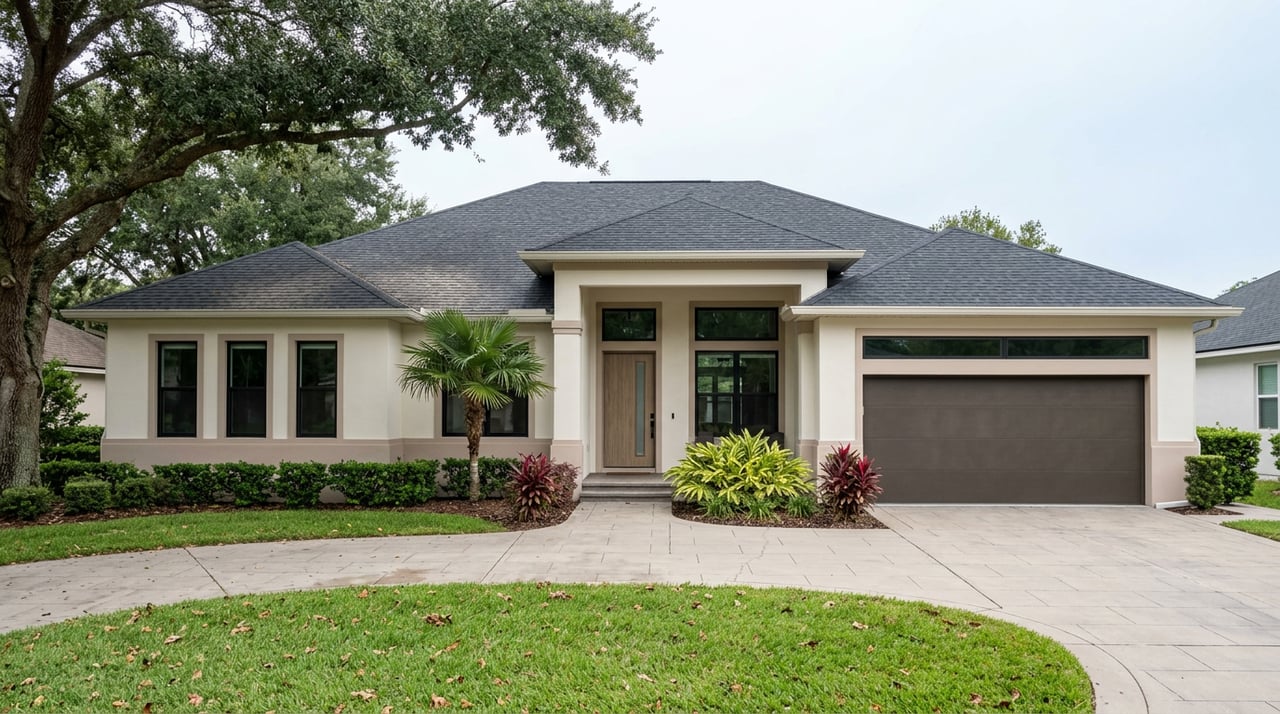
Panther Trace CDD and HOA Fees: What Riverview Buyers Pay
September 24, 2026
September 24, 2026
Two listings come up in the same search: a three-bedroom home in Panther Trace, same square footage, same year built, within a few thousand dollars of each other on price. A buyer comparing them side by side on a portal sees no meaningful difference. Then the closing disclosures arrive, and one buyer is carrying a noticeably higher monthly cost than the other, even though the mortgage payments are nearly identical.
The gap isn't a pricing error. It's the fee stack underneath the sale price, and in Panther Trace that stack is more complicated than the neighborhood's single name suggests. What looks like one master-planned community in Riverview is actually run by two separate local governments, and in some sections a second homeowners association sits on top of the one everybody assumes is the only one.
Panther Trace covers 785 acres and roughly 751 homes built out in phases starting in 2003. Somewhere in that build-out, the developer split the community into two Community Development Districts, Panther Trace I and Panther Trace II, each with its own clubhouse, its own board, and its own budget. CDD I runs its meetings and amenities out of the Bramfield Drive clubhouse. CDD II operates from a separate clubhouse on Newgate Crest Drive and holds board meetings on the fourth Monday of the month.
That split matters because a CDD assessment isn't a flat community fee everyone splits evenly. Each district issues its own bonds to pay for the roads, drainage, and amenities built during its phase, and each district sets its own annual operating and maintenance budget at its own public hearing. A home in CDD I and a home in CDD II are paying into two different accounts with two different repayment schedules, even though both show up on a Hillsborough County tax bill under the same community name.
The list price tells you what the home costs. It doesn't tell you which of Panther Trace's two districts is billing you, or how much of that bill is still bond debt versus ongoing upkeep.
The assessment itself has two parts. One piece repays the bonds that financed the original infrastructure, and that piece is scheduled to shrink and eventually disappear as the bonds get paid down. The other piece covers the annual cost of keeping ponds, landscaping, and amenities running, and that piece doesn't go away as long as the district exists, no matter how old the bonds get. A homebuyer who assumes the CDD line will vanish once the debt is retired is only half right.
The CDD split is only the first layer. Panther Trace also runs on a master homeowners association, and in several of the attached-home sections, that master HOA isn't the only one collecting dues.
Cambray Villas is the clearest example. It's a gated townhome section inside Panther Trace, governed under its own declaration of covenants that sits alongside the broader Panther Trace II Homeowners Association documents. Owners there submit architectural changes to a dedicated alteration committee, request estoppel letters through McNeil Management, and file a tenant lease application before any renter moves in, all separate from whatever the master Panther Trace association requires community-wide. Cambray Creek, a nearby gated townhome section, follows a similar pattern.
In practice, that means a single-family owner in one of Panther Trace's open, non-gated villages is likely paying into one HOA. A buyer purchasing an attached villa in Cambray Villas is paying into two, the village-level association and the master one, plus whichever CDD covers that phase of the community. The details show up in the HOA declaration and in the estoppel letter that gets requested during due diligence.
Community pricing guides published this year put Panther Trace's product roughly into three bands: attached townhomes and villas, including Cambray Villas and Cambray Creek, in the $280,000s to $380,000s, mid-range single-family homes from about $380,000 to $550,000, and larger single-family homes with premium lots running from $550,000 up past $745,000. Those bands overlap in a way that hides the real variable a buyer should be tracking.
A single-family home priced at $420,000 in a non-gated CDD I village and an attached villa priced at $410,000 in Cambray Villas sitting in CDD II can land in the same conversation with a buyer comparing "homes around $400,000 in Panther Trace." One of those homes carries a single HOA and one CDD assessment. The other carries a village HOA, the master HOA, and a different CDD's bond schedule. The sale price converges. The carrying cost doesn't.
| Home type | Governance layers | Where it shows up |
|---|---|---|
| Non-gated single-family, earlier phase | Master Panther Trace HOA + Panther Trace I CDD | HOA statement + county tax bill |
| Non-gated single-family, later phase | Master Panther Trace HOA + Panther Trace II CDD | HOA statement + county tax bill |
| Attached villa or townhome (e.g. Cambray Villas, Cambray Creek) | Village HOA + master Panther Trace HOA + CDD (I or II depending on phase) | Two HOA statements + county tax bill |
Community guides published in 2026 put the master HOA due somewhere around $80 to $150 a month, though that figure moves by section and doesn't include whatever a village-level association charges on top of it. The honest number for any specific address only comes from the actual HOA documents and the current CDD assessment schedule for that parcel, not from a single quoted range online.
None of this is a reason to avoid Panther Trace. The lagoon-style pool, the tennis and basketball courts, the wetland-lined walking trails, all of that infrastructure exists because two decades of phased CDD financing built it and continues to maintain it. The fee stack is the mechanism behind the amenities, not a flaw in the community. But it does mean the comparison shopping most buyers do on price alone misses the number that actually determines monthly cost.
Before an offer goes in on a Panther Trace listing, it's worth confirming four things directly rather than assuming they match the listing next door:
Which CDD, I or II, the specific parcel falls under, since the two run separate bond schedules and are not interchangeable dollar for dollar.
Whether the home sits in an attached section like Cambray Villas or Cambray Creek that carries its own HOA in addition to the master association, and getting both due amounts in writing rather than just the one quoted in the listing remarks.
The current estoppel letter for the property, which shows any past-due balances and where that parcel's CDD bond stands in its repayment. Village associations that use McNeil Management have their own estoppel request process, and building a few extra days into a contract timeline for that paperwork avoids a last-minute scramble.
Whether the CDD assessment on that parcel is still carrying active bond debt or whether that portion has already been retired, since a home further along in its bond schedule can carry a meaningfully lighter assessment than a newer phase still paying down infrastructure.
Does the CDD fee in Panther Trace ever go away? The bond portion is scheduled to end once that specific bond series is repaid. The operations and maintenance portion continues for as long as the district exists, which in practice is indefinitely, so the assessment shrinks but doesn't disappear entirely.
If I rent out a Panther Trace home, do I still owe the HOA and CDD fees? Yes. Both assessments attach to the parcel and follow the owner, not the occupant. Village associations like Cambray Villas separately require a tenant lease application before a renter can move in, on top of whatever fees the owner already carries.
Is Panther Trace I or Panther Trace II the better district to buy into? Neither is inherently better. They reflect different construction phases with separate bond schedules, so the useful comparison is the actual current assessment on a specific parcel, not a general reputation for one district over the other.
Panther Trace rewards buyers who read past the list price, and the two-CDD, sometimes-two-HOA structure is exactly the kind of detail that's easy to miss scrolling through listings and expensive to discover after closing. If you're comparing homes in Panther Trace, or trying to figure out which section actually fits your budget once every fee is accounted for, Command Properties Florida can walk through the specific CDD and HOA documents for any address you're considering. Schedule a Consultation before you write an offer, not after.
This article is general information, not legal, tax or financial advice. Consult a qualified professional about your situation.
Stay up to date on the latest real estate trends.


Get assistance in determining current property value, crafting a competitive offer, writing and negotiating a contract, and much more. Contact me today.