The Seawall Without a Dock: What Bimini Bay's Price Range Actually Tells Buyers
August 20, 2026
August 20, 2026
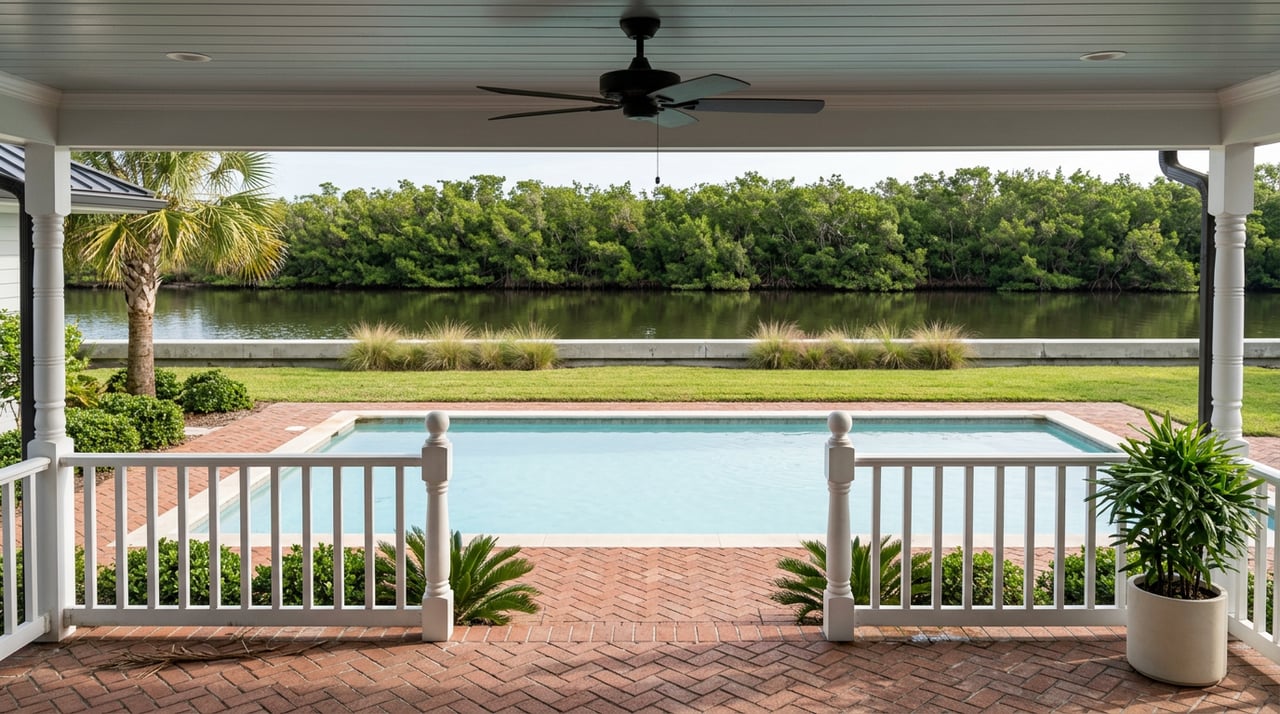
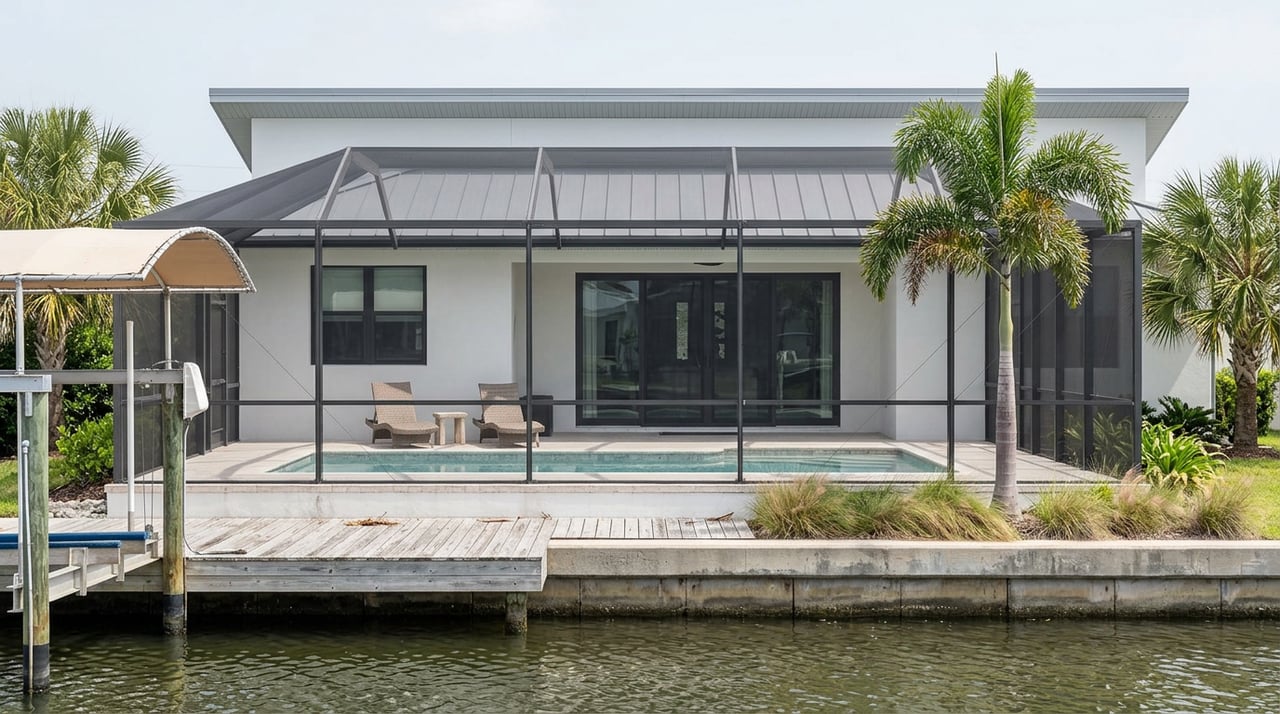
A listing that surfaced in early 2025 for a home on Bahama Grande Blvd in Bimini Bay, the gated waterfront community off Apollo Beach Boulevard, makes the point better than any brochure could. The copy called it a boater's dream: an oversized cul-de-sac lot, a sea wall, direct access to Tampa Bay. The listing also noted that the lot had no dock yet; the buyer would build one.
That single detail explains more about how to shop Bimini Bay than any median price you'll find on a portal. This is not a community where every waterfront address is interchangeable. It's a community where the word "waterfront" can mean a finished dock and a boat lift, or it can mean a concrete wall and a permit application you haven't filed yet, and the HOA dues don't tell you which one you're getting.
Bimini Bay is built out to roughly 157 homesites, developed in phases between 2006 and 2023, with more than half of those lots sitting on saltwater canals that lead directly into Tampa Bay. That split, canal lots on one side, interior lots on the other, is the reason the community's price data looks strange if you only glance at the top-line number.
Recent active listings have spanned from the high $200,000s up to over $2 million, and across roughly 14 active listings the average list price has sat around $646,000. That average combines two very different products. Over the trailing year ending in May 2025, closed sales in Bimini Bay averaged $1.42 million, with a 98% list-to-sell ratio and homes averaging 131 days on market. Those numbers describe the canal-lot end of the market: slower to sell because there are fewer of them and buyers are pickier, but holding value tightly against ask.
A "median Bimini Bay price" alone doesn't show which market it is drawn from. An interior lot with no water access, standard HOA dues, and a shorter path to closing is not competing in the same conversation as a canal-front custom build with a private dock. They just happen to share a gate.
An HOA bill of $1,400 a month isn't paying for a nicer gate.
A Florida CDD is a public-financing structure: the FishHawk Ranch CDD explains that it sells tax-exempt bonds to build the infrastructure up front.
The community's HOA fee helps fund shared maintenance, and the range of $100 to $1,400 a month reported across the community's listings reflects the fact that not every owner is paying for the same set of obligations. An interior lot's dues cover the gate, the pool, the clubhouse, and the landscaping. A canal lot's dues can carry more, and the sea wall or dock itself often isn't covered by the HOA at all.
That's the tradeoff worth naming out loud to a buyer comparing Bimini Bay against other Community Development Districts scattered across Apollo Beach and eastern Hillsborough County.
| Interior Lot | Canal-Front Lot | |
|---|---|---|
| Typical list price band | Lower end of the community's range, closer to the $299,000 to $600,000 tier | Frequently $1 million and up, based on recent closed sales averaging $1.42 million |
| Monthly HOA | Lower end of the reported $100 to $1,400 range | Higher end of the range, often with added maintenance obligations |
| Water access | None | Direct saltwater canal access to Tampa Bay |
| Dock and sea wall | Not applicable | May already exist, or may be limited to a sea wall only, with the dock left to the buyer to permit and build |
| Recent pace to close | Faster, more comparable inventory to price against | Averaged 131 days on market over the trailing year ending May 2025 |
The property tax line tells a similar story. The community's average annual property tax runs around $6,146, but that average is stretched across homes valued from the high $200,000s to well over $2 million, so it's not a number you should apply to any single address without pulling the actual parcel record.
If a Bimini Bay listing markets itself as waterfront, ask directly whether the lot includes an existing dock and boat lift, or only a sea wall. The difference is a real construction project, permitting through the county, and a cost that won't show up in the HOA estoppel because the HOA doesn't own it.
Second, pull the current HOA estoppel and ask what the dues actually fund for that specific lot type. Two houses on the same street can carry different obligations if one backs up to a canal and the other doesn't, and the estoppel letter is where that gets spelled out in writing rather than in a listing description.
Do all the canal lots in Bimini Bay already have a dock? Not necessarily. Some listings advertise a sea wall and bay access without a finished dock, meaning the buyer takes on that construction and permitting after closing.
If you're weighing an interior lot against a canal-front address in Bimini Bay, or trying to figure out how this community's cost structure stacks up against a CDD-funded neighborhood elsewhere in the Tampa Bay area, that's exactly the kind of comparison worth working through with someone who tracks these lot-by-lot differences for a living. Command Properties Florida can walk through the specific estoppel, HOA obligations, and dock permitting questions for any address you're considering. Schedule a Consultation to get a straight answer before you write an offer.
This article is general information, not legal, tax or financial advice. Consult a qualified professional about your situation.
Stay up to date on the latest real estate trends.
Get assistance in determining current property value, crafting a competitive offer, writing and negotiating a contract, and much more. Contact me today.